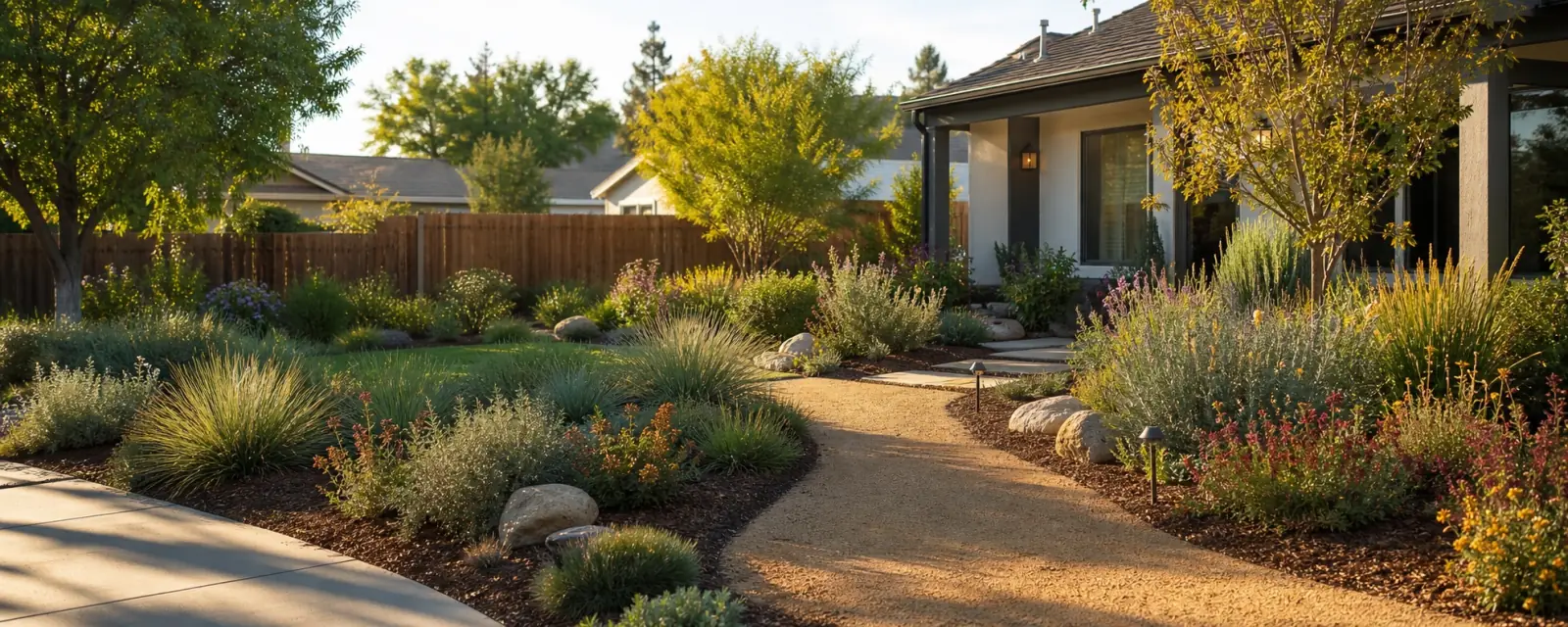
Why replace grass?
Turn a water-hungry lawn into a native landscape or garden.
Replacing turf can lower water demand, reduce maintenance, and turn a single-purpose lawn into a planted landscape that supports shade, soil, stormwater, and local habitat.
The lawn tradeoff
Grass is familiar, but it is not neutral.
Lawns became the standard front-yard choice because they look familiar, they are easy to understand, and many neighborhoods were built around them. But in much of California, grass asks for a lot of water and maintenance while giving little back to the soil, shade, or local habitat.
Replacing part or all of that lawn can turn a high-maintenance surface into a lower-water landscape with plants, mulch, roots, shade, flowers, and places for rain to slow down and sink in.
Water
Use less treated water on grass
In dry parts of California, a lawn can take a lot of water, energy, and maintenance just to stay green. Replacing grass with climate-adapted planting can reduce that demand while keeping the yard useful and cared for.
Structure
Turn a flat lawn into a layered landscape
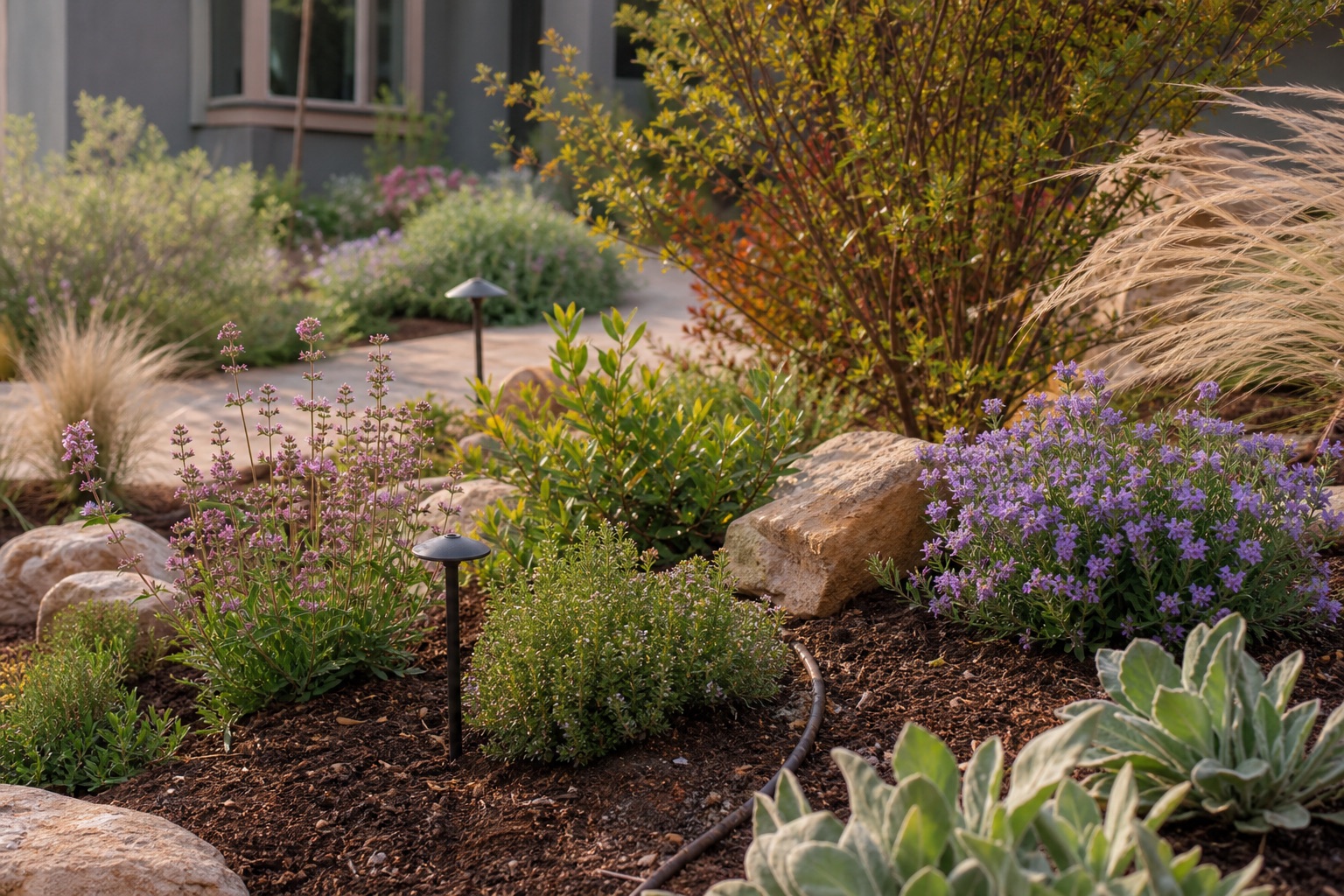
A lawn is usually one short, uniform surface. Native and climate-adapted planting can add groundcovers, flowering perennials, shrubs, grasses, small trees, shade, seeds, and seasonal change.
Inputs
Reduce the mowing, fertilizer, and weed-control cycle
A lower-water yard can be designed to need less mowing and fewer inputs over time. Good mulch, plant spacing, irrigation changes, and maintenance choices do a lot of the work.
Habitat
Make the yard more useful for local life
A converted yard can support pollinators, birds, and soil life when it includes nectar, pollen, seed heads, leaf litter, roots, and places to nest or overwinter.
What a better yard does
A replacement yard should work like a small landscape system.
A rebate can help fund the change, but the lasting value is the system you build: roots that open the soil, mulch that protects it, plants that feed local life, and irrigation that supports establishment without wasting water.
A rebate-ready conversion usually includes
- Photos firstKeep existing-turf photos and wait for any required official pre-approval before removing grass.
- Layered plantingDesign planting in layers: groundcovers, flowering perennials, shrubs, grasses, and small trees where space allows.
- Soil and rainUse mulch, compost, contouring, and permeable surfaces so rain can slow down, sink in, and feed the soil.
- Smart wateringGroup plants by water needs and update irrigation so establishment water goes to roots instead of overspray.
- Living systemMaintain the yard as a living system by pruning lightly, refreshing mulch, and leaving some seed heads and leaf litter.
Planning principles
- Keep current grass visible until your program says you can start.
- Measure the actual turf area, excluding hardscape and spaces that will not be converted.
- Plan plants, mulch, stormwater capture, and irrigation together instead of treating them as separate upgrades.
- Design for the establishment period, then reduce water as the landscape matures.
Start with timing
Check rebate readiness before you remove grass, add mulch, or hire a crew.
The free check helps surface provider fit, possible rebate range, photo readiness, pre-approval risk, and project issues that are easier to fix before work begins.